Bringing an innovative pocket-sized 12-lead ECG with AI-automated interpretation to the market: AnyECG project.
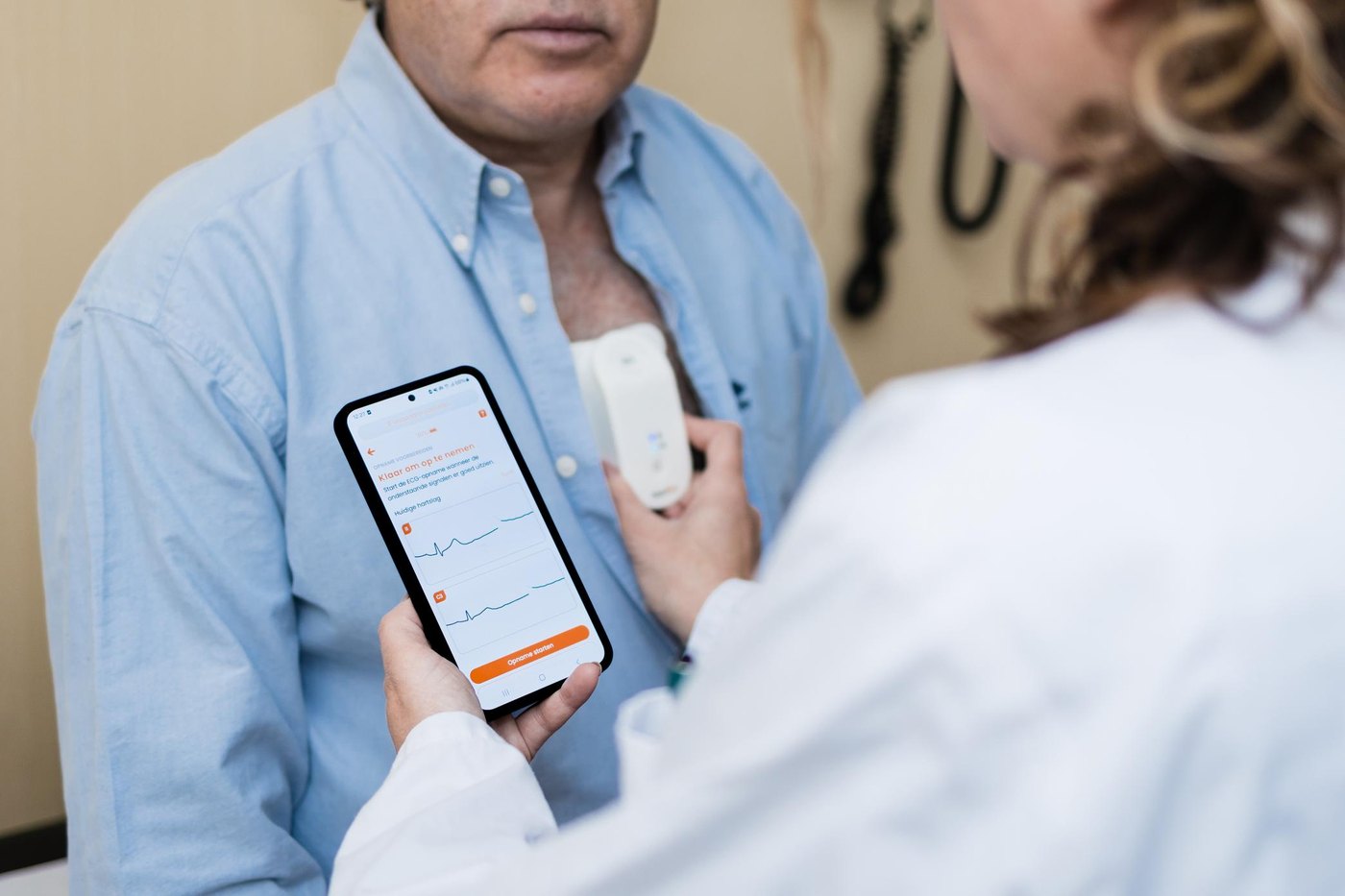
AnyECG is a Eurostars project in which HeartEye (Delft, the Netherlands) and Cardiolyse (Helsinki, Finland) work together on a pocket-sized device that records a medical-grade 12-lead ECG, combined with automated ECG interpretation — so a full cardiac check no longer needs a hospital visit.
The problem
A 12-lead ECG is the clinical standard for assessing the heart, but recording one usually means a hospital or clinic visit, trained staff and a machine with ten lead wires. For people with coronary artery disease and other heart conditions, that often means travelling to a care setting just to get a reading — and waiting for the result to be interpreted.
Portable ECG devices exist, but most record only one or a few leads. They are useful for rhythm checks, yet they do not give the full view of the heart that clinicians rely on for many decisions. And even where a 12-lead ECG is available, reading it well takes specialist expertise that is not present at every point of care.
The project concept
AnyECG brings two pieces together:
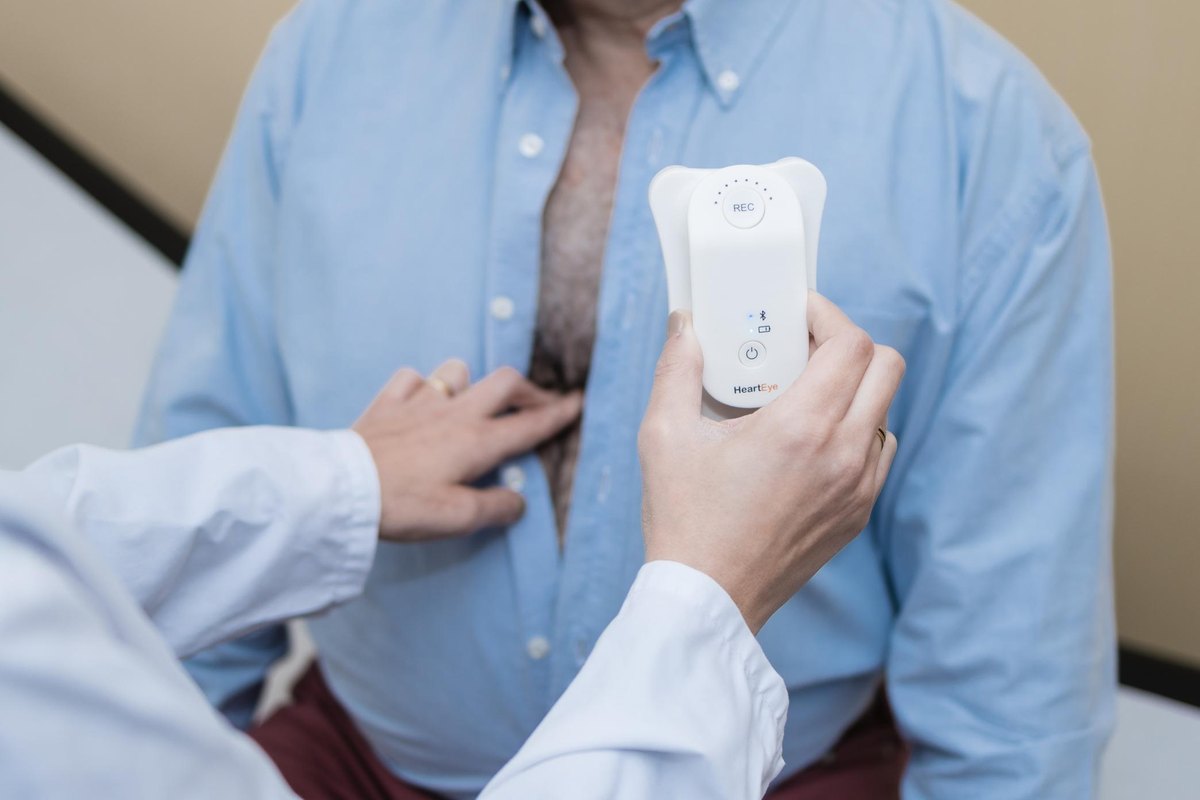
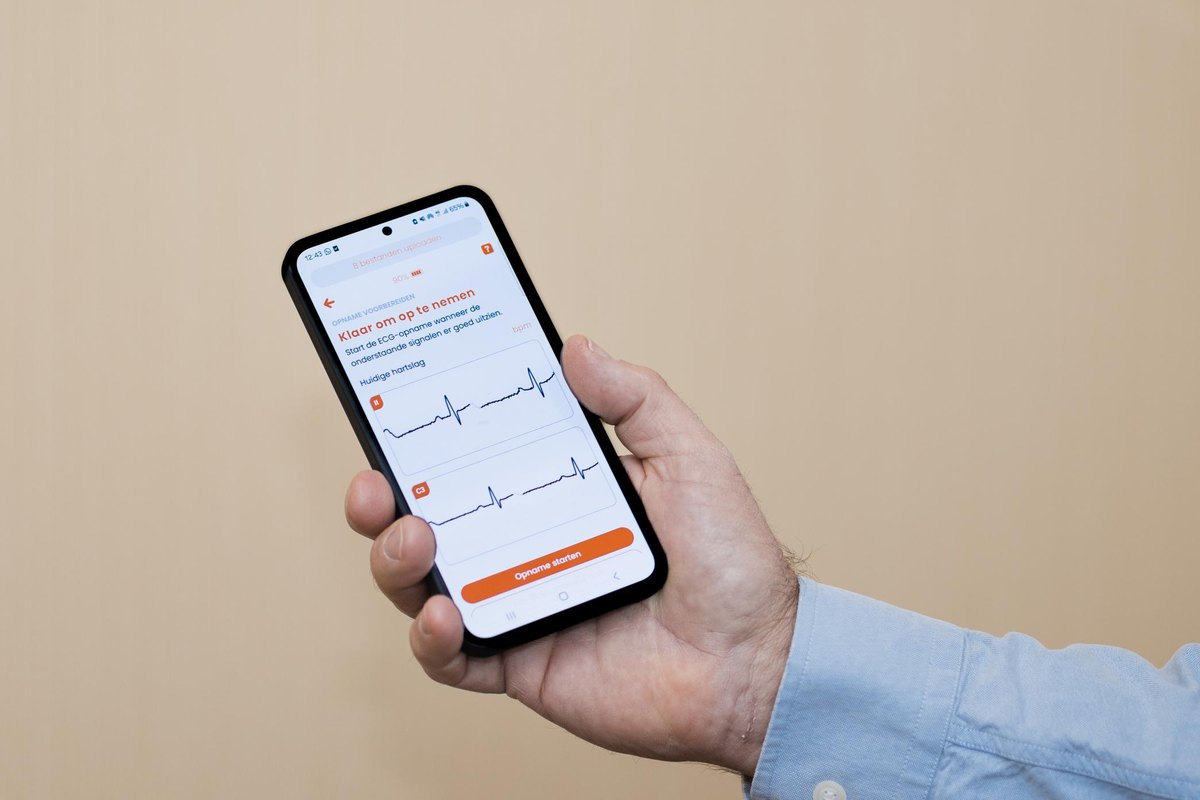
- A pocket-sized 12-lead ECG. The HeartEye ECG is placed on the chest and records a full 12-lead ECG without lead wires. The recording is transferred to a smartphone app and an online portal.
- Easy to use without training. The device is designed so that people who are not ECG specialists can take a recording, in the clinic or at home.
- Automated ECG interpretation. Cardiolyse analyses each recording automatically, so the result is ready for a healthcare professional to review straight away.
What Cardiolyse brings
Cardiolyse is responsible for the automated analysis in the project. Our CE Class IIa ECG analytics are being adapted to the 12-lead recordings that the HeartEye device produces, so that every recording is interpreted the moment it reaches the platform.
- Algorithm tailored to the device. The analytics are tuned and validated on HeartEye 12-lead recordings, accounting for how this new recording method captures the signal.
- Rhythm and morphology findings. Each ECG is checked for rhythm, conduction and morphology findings, with intervals and measurements, presented for review by a qualified healthcare professional.
- Signal-quality checks. Recordings are checked for quality, so a poor recording can be repeated rather than misread.
- Cloud platform and API. Results are delivered through the Cardiolyse platform and ECG API, ready to appear in the HeartEye app and portal.
The value
Together, the device and the analytics aim to make a full cardiac check possible wherever the patient is:
- For patients — periodic heart checks at home or at the GP, without travelling to a hospital for a 12-lead ECG.
- For GPs and clinics — a medical-grade 12-lead ECG taken quickly, with an automated interpretation to support the next step.
- For cardiologists — earlier sight of potential problems, with recordings and findings arriving ready to review.
- For emergency and high-volume settings — fast 12-lead recordings by staff who are not ECG specialists.

About the partners
HeartEye was founded by cardiologists to make clinical-grade ECGs accessible outside the hospital. It develops the pocket-sized HeartEye ECG, its app and portal. Cardiolyse develops CE Class IIa AI ECG analytics used by healthcare providers, device makers and research partners across Europe.
AnyECG is supported by Eurostars, the Eureka programme for international, SME-led research and development, co-funded by the European Union through Horizon Europe.